
The headline for corporate profit growth has been very encouraging in the July-September quarter (Q2) of 2023-24 (FY24), with the combined net profit of listed companies up by 38 per cent year-on-year. However, the earnings distribution has been very lopsided, with most of the growth coming from public-sector oil-marketing companies (OMCs), banks, non-bank lenders, automobile (auto) companies, and cement producers. By comparison, companies from information technology services, fast-moving consumer goods (FMCG), retail, and consumer durables were disappointed, experiencing a sharp slowdown in net sales growth and a relatively muted increase in reported net profit.

'We are seeing signs of improvement in rural overall in terms of demand, but I would still keep my fingers crossed.'

'As China's reopening euphoria fizzled out on the back of some disappointing economic data, we saw inflows coming back to India with full force in the past 3-4 months.'

Analyst are cautious about the performance of IT services sector from January to March quarter (Q4) of FY24 and the first half (H1) of FY25. While the Bloomberg consensus on revenue implies the market is expecting 2-3 per cent growth on a quarter-on-quarter (Q-o-Q) basis for the IT majors through FY25, the H1FY25 is likely to see even flatter returns, and Q4FY24 is likely to be poor. There is likely to be some recovery in the second half (H2FY25) but even so, there's a chance that the market will be overall disappointed.

The improving outlook for the power sector has caught the interest of dividend yield funds. In the first four months of the current financial year (2023-24, or FY24), five of the six largest dividend yield funds have shown a notable increase in their exposure to stocks within the power sector. Some have even introduced new stocks to their portfolios.

Retail sales of automobiles in the domestic market saw a 7.73 per cent year-on-year decline in October this year at 21,17,596 units, mainly due to dip in two-wheeler uptake with the inauspicious period of Shraddh affecting new purchases, the Federation of Automobile Dealers Associations (FADA) said on Monday. Retail sales of automobiles in the domestic market stood at 22,95,099 units in October 2022, FADA said in a statement. Two-wheeler retail sales were at 15,07,756 units last month, as against 17,25,043 units in the year-ago period, down 12.60 per cent, as per the latest data by FADA.

tailwinds of a remarkable year and handsome investor returns, Indian equities are set for an eventful journey in 2024, with a slew of local and global cues -- varying from interest rates to Lok Sabha polls to geopolitical happenings. Analysts are of the view that the bull run in the domestic equity market will continue, and over the next 3-6 months, the benchmark indices -- Sensex and Nifty -- could climb up to 7 per cent. In 2023, the 30-share BSE Sensex jumped 11,399.52 points or 18.73 per cent, and the NSE Nifty climbed 3,626.1 points or 20 per cent.

The July-September quarter results of software companies in the engineering research and development (ER&D) segment were broadly in line with expectations, though there have been cuts in revenue growth guidance. While results were a mixed bag, and there are cautionary views on the near-term outlook, brokerages and global consulting firms highlight the strong growth trajectory for the sector. They expect this segment of the software sector to grow by 8-12 per cent going forward.

Domestic automobile retail sales rose 10 per cent in June driven by sales growth across various segments, including passenger vehicles and two-wheelers, automobile dealers body FADA said on Thursday. Total retail sales last month rose to 18,63,868 units from 17,01,105 units in the year-ago period. Passenger vehicle retail sales increased 5 per cent to 2,95,299 units as against 2,81,811 units in June 2022.

Private equity and venture capital funds' investment in the country continued to fall in May, with the overall values declining by nearly 44 per cent to $3.5 billion, a report said on Monday. The dedicated funds had invested $6.2 billion in May 2022 and $7.4 billion in the preceding month of April 2023, representing a dip of 44 per cent and 52 per cent, respectively, as per the report by industry lobby IVCA and consultancy firm EY. "Despite a recovery of sorts being seen in tech sector indices and some of the large global tech names, sentiment in India for tech sector investments has been lacklustre, and fundraising by Indian startups has been sluggish," the firm's partner Vivek Soni said.

'We're putting a lot of focus on GenAI developers and people who can really do all the architecture and programming.'

Announcing the bi-monthly monetary policy, Reserve Bank of India Governor Shaktikanta Das said the RBI's internal survey says manufacturing, services and infrastructure sector firms are optimistic of the business outlook.
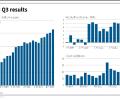
Since a week ago, better-than-expected results from Infosys Limited, Tata Consultancy Services Limited and HCL Technologies Limited sparked a 13 per cent rally in the sector subindex that grinded to a halt on Friday.

'To the believers of crypto regulations, I have only one question to ask, how will you regulate it?'

In a remarkable comeback, foreign portfolio investors (FPIs) have pumped Rs 1.7 lakh crore into the Indian equity markets in 2023, propelled by confidence in the country's robust economic fundamentals amid a challenging global landscape. The year 2023 has witnessed massive investment by FPIs, thanks to the sharp uptick in inflows of Rs 66,134 crore in December. Going forward, FPI flows are expected to be robust.

Automotive (auto) major Mahindra & Mahindra (M&M), which is readying to launch nine sport utility vehicles (internal combustion engine/ICE), seven Born Electric Vehicles (BEVs), and seven light commercial vehicles by 2030, has outlined an investment of Rs 27,000 crore in its auto business between 2024-25 (FY25) and 2026-27 (FY27). Over the next three years, the company will deploy Rs 37,000 crore, including its auto business, farm business (Rs 5,000 crore), and service business (Rs 5,000 crore).

Indian growth in the rest of this fiscal year and next will be propelled by robust domestic consumption as consumer confidence improves, and by investment, including large increases in government capital expenditure, according to the Asian Development Outlook September 2023. "As slowing exports could foment headwinds for the economy, and erratic rainfall patterns are likely to undermine agricultural output, the growth forecast for FY2023 is revised down marginally to 6.3 per cent," ADB said.

Amid rupee sliding below 64 to a dollar, global agency Standard & Poor's on Tuesday said it will maintain negative outlook for the country as currency depreciation is adversely impacting investor confidence.

India's leading capital goods and engineering firms are in the midst of one of their busiest seasons, with the combined orderbook surging past Rs 8 trillion in value. As on September 30, 2023, 13 of India's top 15 listed capital goods and engineering firms, for which data for the September 2023 quarter was available, had a total orderbook worth Rs 8.45 trillion - a number unseen at least since 2018-19. "This intuitively looks like an all-time high factoring in inflation," said Anupama Arora, a senior independent analyst who tracks the capital goods sector.

New businesses have been secured from the public and private sectors, as well as domestic and international markets.

'We see the defence industry as one of the leading sectors, which will significantly contribute to the growth of the Indian economy, but more importantly, bring atmanirbharta to national security.'

Financial services and consumer durable companies accounted for most of the selling by foreign portfolio investors (FPI) in the last fortnight of February. FPIs sold finance stocks worth Rs 2,263 crore and consumer durable stocks worth Rs 1,111 crore, according to data collated by Prime Infobase. Information technology (selling worth Rs 708 crore), metals and mining (Rs 694 crore), and power (Rs 497 crore) were the other sectors where overseas funds sold shares.
Mutual funds (MFs) have lined up information technology (IT) funds, indicating that technology stocks are back on fund managers' radar after a hiatus. Over the past 18 months, stock prices for companies in the software space have either corrected or remained subdued. Fund houses have launched five IT-based sectoral funds in the past three months, with three of them taking the passive route.

Among the Sensex firms, ITC, NTPC, Axis Bank, Larsen & Toubro, Bajaj Finance, Asian Paints and Tata Steel were the major gainers. Mahindra & Mahindra, Wipro, Maruti, IndusInd Bank, Kotak Mahindra Bank and HDFC Bank were among the laggards.

The headline seasonally adjusted Nikkei India Composite PMI Output Index, that maps both the manufacturing and services sectors, rose from 53.3 in June to 54.1 in July.

Overall, the credit profiles of players will be supported by healthy balance sheets and liquidity. Prudence in capital and development expenditure, efficient working-capital management, and recent equity raising will help sustain credit metrics in FY22.

Nifty50's earnings growth, estimated at 20 per cent by global research and brokerage firm Jefferies for financial year 2023-24 (FY24), will be amongst the top three in the Asian region, and is likely to outperform peers. Asean 40 index with 29.1 per cent estimated earnings growth and Straits Times Index (STI) with 29.1 per cent estimated earnings growth are the only two other indices in the Asian region that are likely to outperform India, suggests the recent Jefferies report, coauthored by Mahesh Nandurkar, their managing director along with Abhinav Sinha and Nishant Poddar.

The benchmark Nifty and Sensex could see another 8-10 per cent from the current levels, said HDFC Securities in its outlook for equity markets in 2024. The brokerage said that the market movement in the next year will not be linear, and there will be more volatility. When asked about the market reaction to the General Elections in 2024, Dhiraj Relli, managing director and CEO of HDFC Securities, said more than the outcome of the elections, the market movement in the next three to four months will decide the market trajectory post elections.

While analysts remains overweight on financials, property, discretionary, industrials and materials, they maintain a neutral stance on pharma, telecom and energy; and underweight on staples, utilities, and IT services.

The rapid decline in fiscal health and deterioration in the external sector outlook has prompted the Reserve Bank of India (RBI) to ask the government to hasten domestic reforms to curb its subsidy bill and encourage renewed equity flows.

Indian equity markets have a limited upside potential in the near-term as they negotiate the ensuing cyclical slowdown, wrote analysts at Nomura in a recent coauthored report led by Saion Mukherjee, their managing director and head of equity research for India. He, however, believes that the foundations are in place for sustainable growth over the medium-to-long term, and hence suggests a 'buy on dips' strategy to equity investors. As an investment strategy, Nomura prefers domestic-oriented sectors and companies over exporters, and prefers stocks that provide valuation comfort. Industrials and banks are their overweight sectors, while IT services and consumer discretionary are their underweight sectors.

The IHS Markit India Manufacturing PMI rose from 51.2 in November to 52.7 in December. Factories benefited from a rebound in demand, and responded by scaling up production to the greatest extent since May. As per the survey, new work orders witnessed marked improvement, with the pace of expansion picking up to the fastest since July.

Global funds, according to Christopher Wood, global head of equity strategy at Jefferies, are now beginning to pay more attention to India with the market now offering 30 companies with a market capitalisation over $25 billion.

India's real GDP growth will decline marginally to 6.3 per cent in 2024 from the 6.4 per cent estimated for 2023, an American brokerage firm said on Monday. The next calendar year will be of two halves, wherein the government spending before the upcoming General Elections will be the key driver for growth, while after the elections, it will be the re-acceleration in investment growth, especially from the private sector, Goldman Sachs said in a report. From a fiscal year perspective, the brokerage said it expects growth to accelerate to 6.5 per cent for FY25 from the 6.2 per cent it has projected for the ongoing FY24, it added.

Showing the effect of the slowdown in global economic activity, the equity foreign direct investment (FDI) into India declined sharply to $13.9 billion in April-July 2023 from $22.04 billion a year ago. The net FDI, inflows minus outflows, declined from $17.28 billion in April-July 2022 to $5.70 billion in April-July 2023 on account of moderating gross FDI and a rise in repatriation. Gross FDI into India moderated to $22.0 billion during April-July 2023 from $29.6 billion a year ago, according to Reserve Bank of India data.

JSW Steel (3.37 per cent), Tata Steel (3.33 per cent), Maruti (3.24 per cent), Power Grid (3.07 per cent), IndusInd Bank (2.95 per cent), Bajaj Finance (2.12 per cent) and Tech Mahindra (2.22 per cent) were among major gainers. On the other hand, Ultratech Cement, Sun Pharma, Nestle and L&T were the losers.

The five warmest years in Indian weather history have occurred in the past 14 years -- the others being 2009, 2017 and 2010, in order of intensity.

Owing to the risk perception attached with the segment by banks, the residential realty segment has been increasingly relying on non-banking financial companies and housing finance companies to raise debt financing, reports Abhijit Lele.

After auto components major Bosch Ltd, Sundaram-Clayton, Hero MotoCorp now announce temporary production shut down
